2. April 2026
GenAI Zürich 2026, Zurich
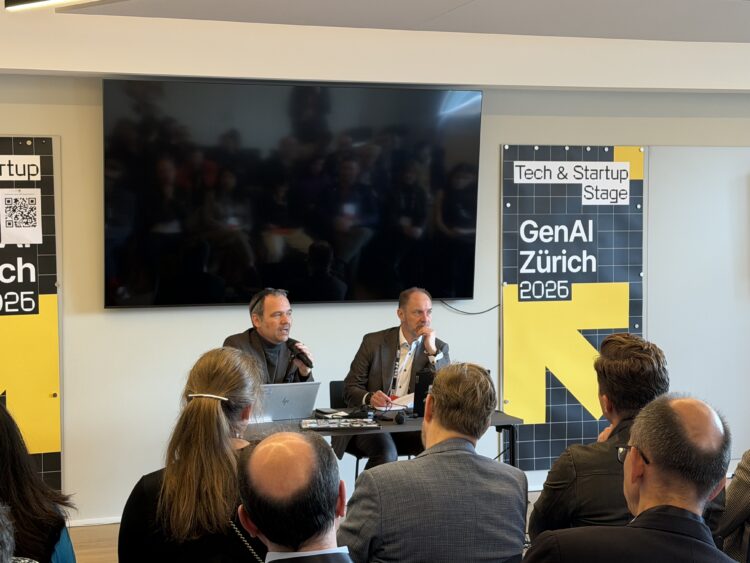
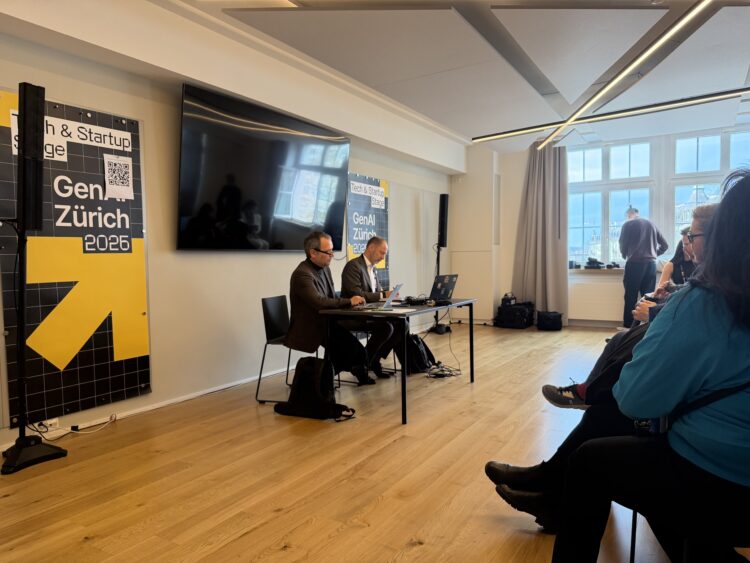
ICT4Peace hosted launch-event for the Geneva 2027 AI Summit at GenAI Zürich 2026.
After the United Kingdom, Korea, France, India, Switzerland will be the host of the next global AI Summit in 2027 in Geneva.
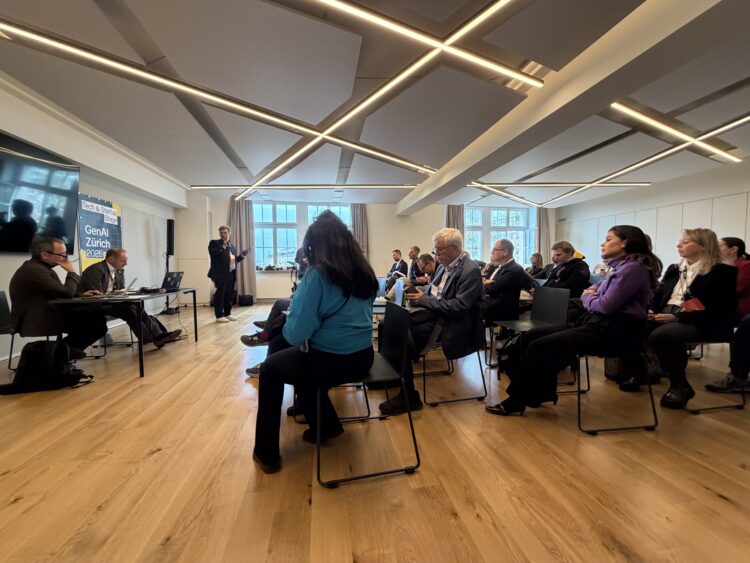
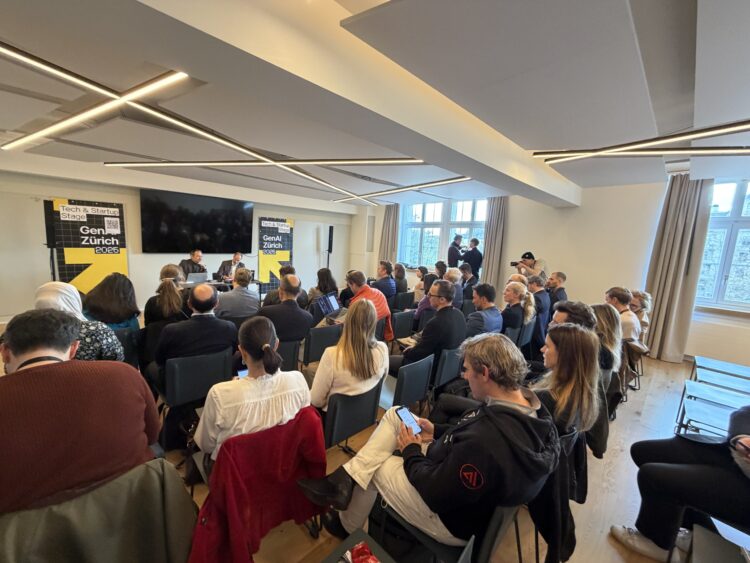
In order to prepare for the Summit, ICT4Peace was invited by the Swiss Government to organise and host a launch-event with a workshop with 40 participants from government, business, academia and civil society at GenAI Zürich to start discussing the objectives and possible concrete outcomes of the Geneva AI Summit in 2027.
The launch-event was moderated by Ambassador Thomas Schneider, Vice-Director of Bakom, and Ambassador Markus Reubi, Project Lead 2027 Geneva AI Summit, Ministry of Foreign Affairs of Switzerland (EDA). Katharina “Nina” Frey from ICAIN, ETH and Daniel Dobos from Swisscom moderated the two break-out sessions.
Daniel Stauffacher, Founder of ICT4Peace organised and hosted the event at GenAI Zürich on 1 April. The results of this workshop will be reported to the Meeting of the Governments’s Platform Tripartite on 13 April in Bern.
The following 5 questions were discussed at the workshop. For those who were not able to participate, you can give your input via the following online link: https://tally.so/r/EkLYBo
Please share your thinking on any or all of the following questions. There are no wrong answers – we value diverse perspectives.
The answers should be:
Outcome-driven: Should help to define what Geneva 2027 should deliver.
Operational: focuses on what can be implemented and measured
Inclusive: designs credible participation mechanisms
Coordinated: with openness and across parallel initiatives
1. Focusing on Swiss strengths
When it comes to defining a key focus of the Summit and its potential outcomes, we think it makes sense to try and build this on the particularities and strengths of Switzerland, and identify areas, issues and outcomes that Switzerland is better suited to achieve than others. What do you see as particular strengths of Switzerland – e.g., an open debate culture, pragmatic dialogue and interdisciplinary cooperation across stakeholder groups, a pragmatic and agile approach that allows innovation and agility as well as decision-making that is close to the people and the economy?
2. Identifying areas where there is a need for dialogue, progress, and solutions
Where is there most need for dialogue, progress, and solutions, focusing on the expectations and hopes of national and international stakeholders about what the Geneva Summit should or could produce? What political outcomes are needed or wanted? What are the issues where there is significantly broad agreement that we should make progress on a global level? What concrete deliverables are people waiting for?
3. Identifying potential partners as well as potential opponents to specific possible political goals
When discussing potential political outcomes, it makes sense to bear in mind not just potential partners and allies, but also potential opponents – and thus also identify the probability and likelihood of support and success for a specific political outcome.
4. Potential concrete tools, instruments, and solutions that could be presented as “Swiss contributions” to make progress
In addition to producing a political outcome, it would make sense to use the time until the summit to develop concrete tools, instruments, services, and applications provided by Swiss research and industry players as concrete Swiss contributions that help to solve problems and seize opportunities. This could be seen as a win-win between the goals of showcasing the Swiss innovation potential and providing concrete support to many players on a global level, in particular also from developing countries. What could be such concrete tools that are being or could be developed and then presented at the Summit? (These tools can be part of the official summit outcomes, but they can also be produced as side-products of the summit, communicated in a way that is mutually reinforcing.)
5. Building on Swiss values of diversity, inclusivity, and community cooperation
Diversity, subsidiarity, and inclusivity are key elements of the Swiss identity and the way of doing things. How do we concretely use these to produce value added with and around the summit? How should we organise the Summit and its preparatory process so that we make maximum benefit of these values, and so that we at the same time reinforce them and make them even stronger and attractive also for other countries and stakeholders? How do we use and organise the Swiss cooperative spirit with the diversity of actors in Switzerland and the possibility to organise pre- and side-events and many diverse work-streams, so that in the end, this all fits together nicely and efficiently and contributes to a coherent whole?
A summary of all answers will be submitted to the Swiss Government at the forthcoming Meeting of the Platform Tripartite one 13 April 2026 in Bern.